

Research question and scope
This review examines what the supplied research records establish about Two Up, with particular attention to its identity, operating transparency, platform, and the evidence available for assessing player reputation. It is written for beginners who want to separate documented information from assumptions that are not supported by the available material.
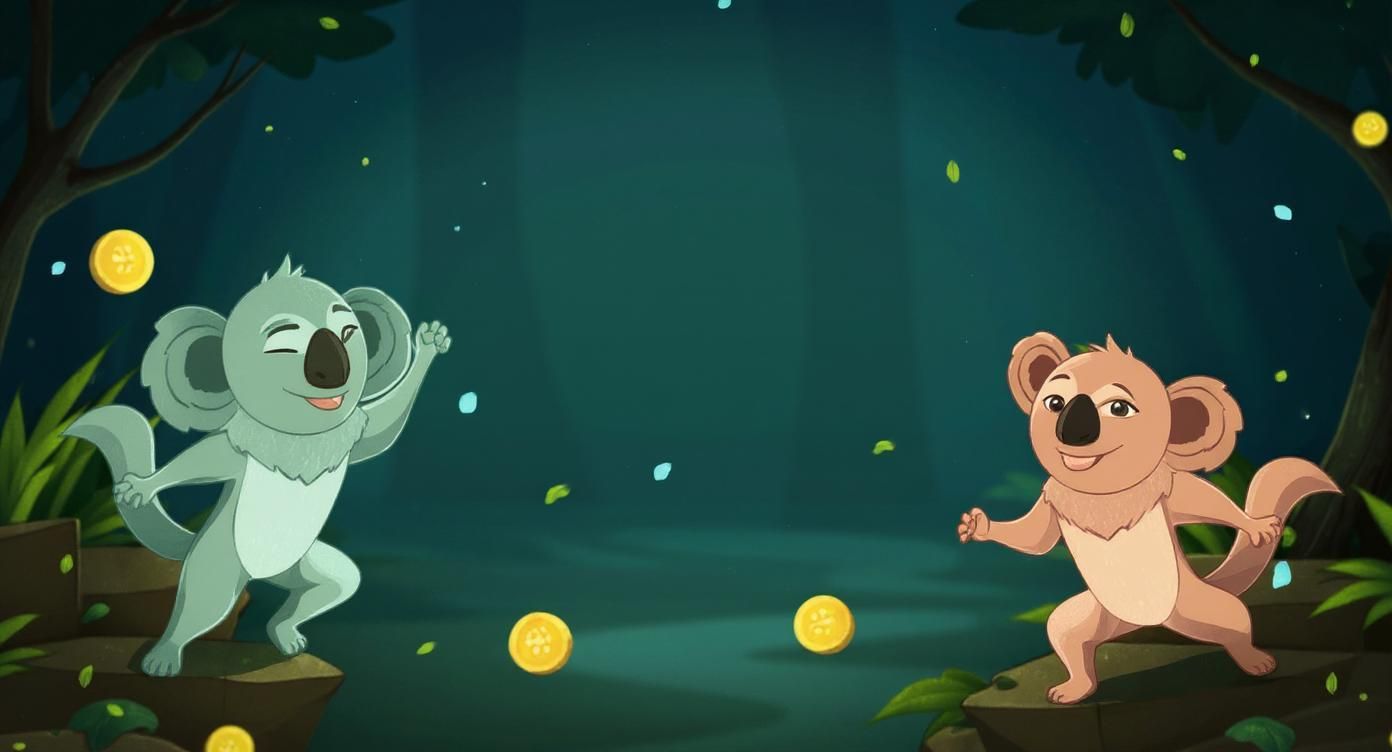
The evidence is limited to retained research notes about the brand. Those notes describe Two-Up Casino as primarily associated with a single online casino entity with strong Australian cultural themes, including kangaroos and koalas in its marketing. The name is described as deriving from the traditional Australian coin-tossing game Two-Up, which was historically popular among soldiers. This explains the brand presentation, but it does not by itself establish service quality, player satisfaction, or legal status in Australia.
Method and evaluation criteria
The review uses four criteria. First, it considers whether the operator’s identity and history are clearly described in the retained material. Second, it examines what the research notes report about licensing and dispute handling. Third, it looks at the platform and gaming offer as described, without treating a listed product as proof of current availability. Finally, it considers whether the records provide meaningful evidence about player reputation.
Each finding is kept at the strength of the underlying note. Where a record reports, states, or describes a position, this article identifies it as a research-note claim rather than presenting it as independently verified fact. Where the records do not establish an answer, that gap remains explicit.
Brand identity and ownership information
A retained research note reports that Two-Up Casino was established in 2018 and is owned and operated by Blue Media N.V. The same note identifies twoupcasino.com as the official website and reports that the branding and promotions primarily target Australian and US markets. These details provide a basic account of the entity described in the research, although the records do not independently verify the ownership information or establish how the brand currently operates in each market.
The Australian theme is a prominent part of the identity described by the stored research. That theme should not be confused with evidence of Australian regulation, an Australian corporate structure, or an Australian licence. The research records do not establish any of those points.
Licensing and transparency
The supplied research note reports that Two-Up Casino operates under a licence from Curaçao. It also states that a specific licence number was not readily displayed on the casino website or in most third-party reviews. The note describes this as a significant transparency issue for experienced players. That is the wording and assessment of the retained research; it is not an independent legal conclusion made by this review.
For a beginner, the important distinction is between a general licensing statement and verifiable licence documentation. The records preserve the former claim but do not supply a licence number or other independently checked regulatory record. They therefore support saying that Curaçao licensing is reported in the research, while leaving the precise licence details unestablished.
This point also limits any conclusion about whether the service is suitable for a particular Australian user. The dossier does not provide a current Australian regulatory assessment, and the Australian cultural branding cannot be treated as evidence of Australian authorisation.
Dispute handling and player reputation
The stored research reports that Two-Up Casino does not publicly list a partnership with a third-party Alternative Dispute Resolution service such as eCOGRA or IBAS. It states that the primary dispute-resolution channel is the casino’s internal customer support team. This is a specific transparency finding in the research notes, not proof that every dispute is handled poorly or that a complaint would have a particular outcome.
The records also state that detailed financial reports are not publicly available because the company is privately held under the Blue Media N.V. umbrella. According to the note, financial stability must instead be inferred from operational history, player feedback about payouts, and the general reputation of sister sites. However, the supplied dossier does not include the underlying player feedback, payout records, financial statements, or a defined sample of reviews.
As a result, the evidence does not establish a general player-reputation score. It supports a narrower conclusion: the retained research identifies internal support as the stated dispute route and records limited public financial information, but it does not provide enough underlying material to measure how players generally rate the brand or how consistently disputes are resolved.
Platform and mobile access
A retained research note describes the gaming platform as primarily powered by Real Time Gaming, or RTG. It also reports that some sources mention Spinlogic Gaming, which the note describes as closely associated with RTG, while Visionary iGaming, or ViG, is reported as the provider of the live-dealer casino.
The same research describes a mobile-optimised website rather than a dedicated native application for iOS or Android. This establishes the format reported in the dossier: access through a standard web browser on smartphones and tablets, rather than through a separately identified native app. The records do not provide device-by-device testing results, performance measurements, or evidence of current availability.
On fairness, the casino is reported to state that it uses a Random Number Generator to produce game outcomes. The note describes RNG use as standard practice for legitimate online casinos and says that RTG and ViG are expected to have their software audited for fairness. The wording is important: the supplied records do not provide audit reports, test dates, certificates, or independent verification. Therefore, they do not establish that every game outcome has been independently tested on the basis of the material supplied here.
Game selection described in the research
The stored research describes a library of more than 200 titles and characterises that selection as relatively small compared with many modern online casinos. It reports that the games are almost exclusively sourced from RTG for pokies and table games, and from ViG for live casino content. Because this is a description in the research notes, it should not be read as a current inventory or as a guarantee that every listed title remains available.
The RTG selection is described as including both classic and video slots with different themes and features. The notes also identify table games and video poker, including Blackjack, Baccarat, Roulette, Caribbean Stud Poker, and Tri-Card Poker. These entries show the categories and examples retained by the research, but they do not establish payout rates, game rules, wagering conditions, or the current configuration of the library.
The live-dealer section is described as being powered by Visionary iGaming and as streaming real games with human dealers in real time. Again, this is the product description preserved by the dossier. It does not amount to independent testing of stream quality, dealer conduct, availability, or player satisfaction.
What the evidence supports
Taken together, the records support a measured profile of a casino brand that is described as established in 2018, associated with Blue Media N.V., and built around Australian-themed branding. The research also reports RTG as the main gaming platform provider, ViG for live-dealer content, and browser-based mobile access rather than a native mobile app.
The clearest limitations concern verification and reputation evidence. Curaçao licensing is reported, but the retained material does not supply a specific licence number. Internal customer support is reported as the main dispute channel, while a publicly listed third-party ADR partnership was not established in the research note. Financial reports and the underlying player-feedback material needed to assess payout reputation are also not supplied.
These findings should not be collapsed into a single overall verdict. A brand identity, a provider description, a licensing claim, and a transparency observation answer different questions. None of them, alone or together, proves a particular individual’s likely experience.
Limitations and common misreadings
The most important limitation is source depth. The dossier contains research notes rather than a complete audit, a representative review dataset, or independently checked regulatory documentation. It therefore cannot establish a current player-reputation rating, the outcome of individual complaints, or the performance of the website on a particular device.
Another common misreading is to treat the Australian theme as evidence of Australian oversight. The retained material supports the existence of Australian cultural branding, but it does not establish Australian licensing or local regulatory approval. Similarly, the mention of RNG use does not supply an independent fairness certificate, and a game being listed in the research does not establish that it is currently available.
Finally, the absence of detailed financial reports in the selected research note should be understood narrowly. It records that such reports are not publicly available according to that note. It does not, by itself, establish insolvency, poor performance, or a particular payout outcome.
Conclusion
The supplied evidence presents Two Up as an Australian-themed online casino brand associated in the research with Blue Media N.V., RTG and ViG software, and browser-based mobile access. It also reports Curaçao licensing, internal customer support as the primary dispute route, and limited public financial information. These are useful indicators for describing the brand and its stated operating structure. The Australian-themed Two Up casino brand derives its name from the traditional Australian coin-tossing game, Two-Up.
For the specific question of player reputation, the evidence is narrower. The records do not provide a sufficiently documented body of player reviews, payout data, dispute outcomes, or independent verification to establish a general reputation. The most accurate conclusion is therefore comparative: some operating and product details are reported, while the evidence for broader reputation and several transparency questions remains limited or unverified in the supplied research.
Mini-FAQ
What method was used for this Two Up review?
The review compared retained research notes against four criteria: brand identity, licensing transparency, platform and games, and evidence about player reputation. Attributed claims were kept as claims, and unsupported conclusions were not added.
What does the research establish about player reputation?
It does not establish a general player-reputation rating. The notes discuss player feedback about payouts as something that would inform financial-stability assessment, but the supplied dossier does not include that underlying feedback or enough data to measure overall player sentiment.
Is the reported Curaçao licence independently verified here?
No. A retained research note reports Curaçao licensing, while also stating that a specific licence number was not readily displayed. The supplied material does not provide independent verification of the licence details.
What is reported about mobile access?
The research describes a mobile-optimised website accessible through a standard browser on smartphones and tablets. It reports no dedicated native iOS or Android app, but the dossier does not provide independent device testing.